
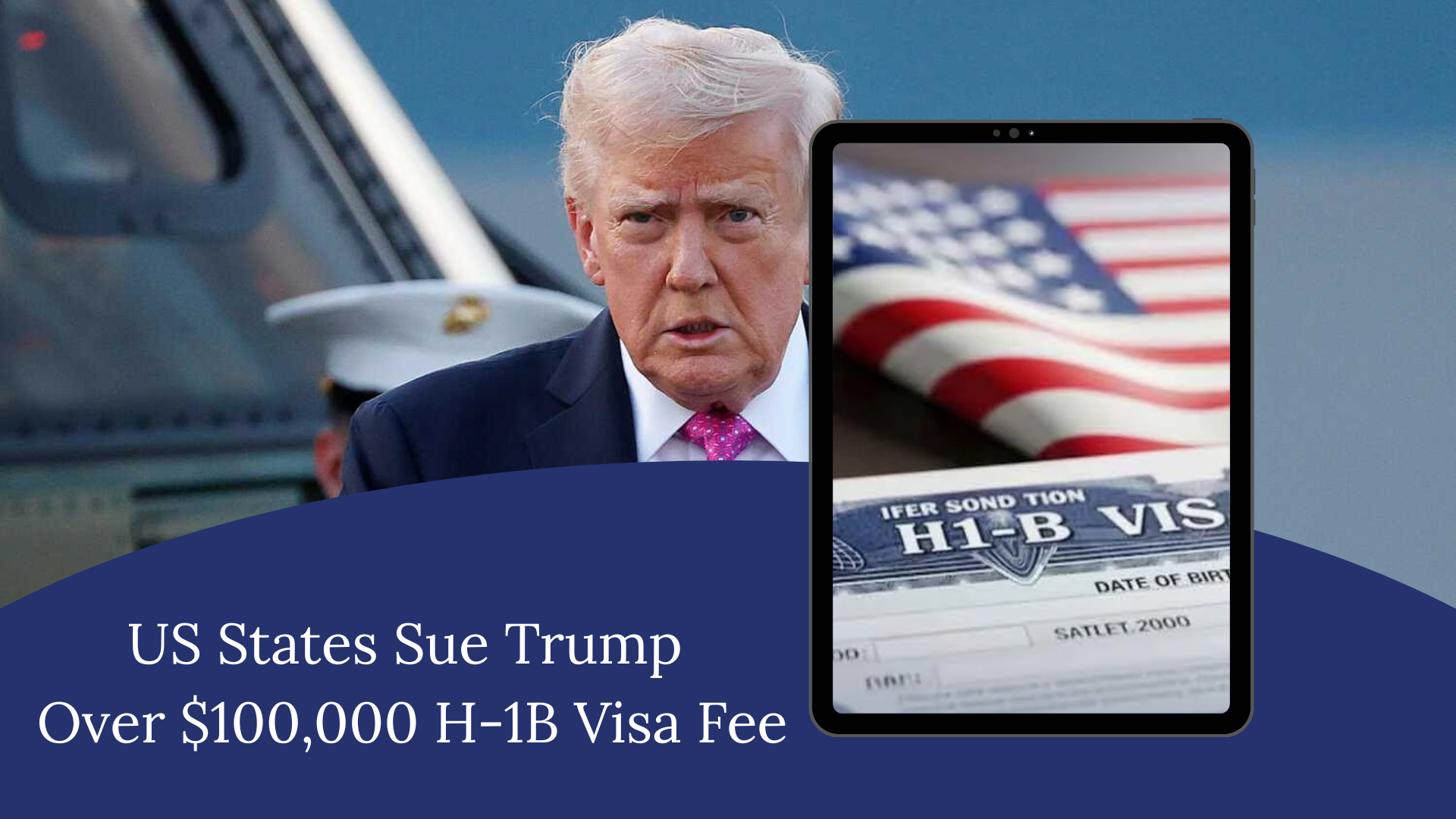

US States Sue Trump Over $100,000 H-1B Visa Fee. California and 19 other US states have filed a lawsuit to block President Donald Trump new $100,000 fee on H-1B visas, calling the move unlawful and unconstitutional. The lawsuit was filed Friday in federal court in Boston, marking the third legal challenge against the controversial fee announced by Trump in September.
Currently, employers pay between $2,000 and $5,000 in government fees to sponsor an H-1B visa. The new rule raises that cost by nearly twenty times.
What Is the $100,000 H-1B Visa Fee?
Under Trump order, new H-1B visa holders cannot enter the United States unless their employer pays a one-time $100,000 fee. The administration says the measure aims to prevent abuse of the H-1B program and protect American jobs.
The order does not apply to:

- Existing H-1B visa holders
- Applicants who applied before September 21, 2025
States Say Trump Has No Legal Power
California Attorney General Rob Bonta said the president overstepped his authority.
In a public statement, Bonta’s office said federal law only allows immigration agencies to collect fees that cover administrative costs, not generate revenue.
“This fee far exceeds the actual cost of processing H-1B petitions,” the statement said.


The lawsuit argues that:
- Trump cannot impose new fees without Congressional approval
- The Constitution bars the president from raising revenue unilaterally
- The fee violates long-standing federal immigration law
Impact on Tech, Healthcare, and Education
The H-1B visa program allows US employers to hire highly skilled foreign workers in specialty fields.
Industries most affected include:

- Technology
- Healthcare
- Higher education
- Scientific research
California, home to Silicon Valley, relies heavily on H-1B professionals.
Bonta warned the fee would:
- Increase labor shortages
- Raise operating costs
- Reduce access to education and healthcare services
States Joining the Lawsuit
Along with California, the states participating include:

- New York
- Massachusetts
- Illinois
- New Jersey
- Washington
- And several others
Most of the states involved are led by Democratic attorneys general.
White House Defends the Policy
The White House has defended the fee in response to earlier lawsuits.
Officials say the measure is a lawful use of presidential power and will discourage companies from replacing American workers with cheaper foreign labor.

Trump cited federal immigration law allowing the president to restrict entry of foreign nationals deemed detrimental to US interests.
Business Groups Push Back
Major business groups strongly oppose the new fee.
The US Chamber of Commerce, along with unions, employers, and religious organizations, has filed a separate lawsuit in Washington, DC.
Conclusion
The lawsuit against Trump $100,000 H-1B visa fee highlights a major legal battle over executive power and immigration law. If blocked, the policy could protect employers, skilled workers, and essential services from disruption. The court’s decision will set a lasting precedent for future US visa regulations.