
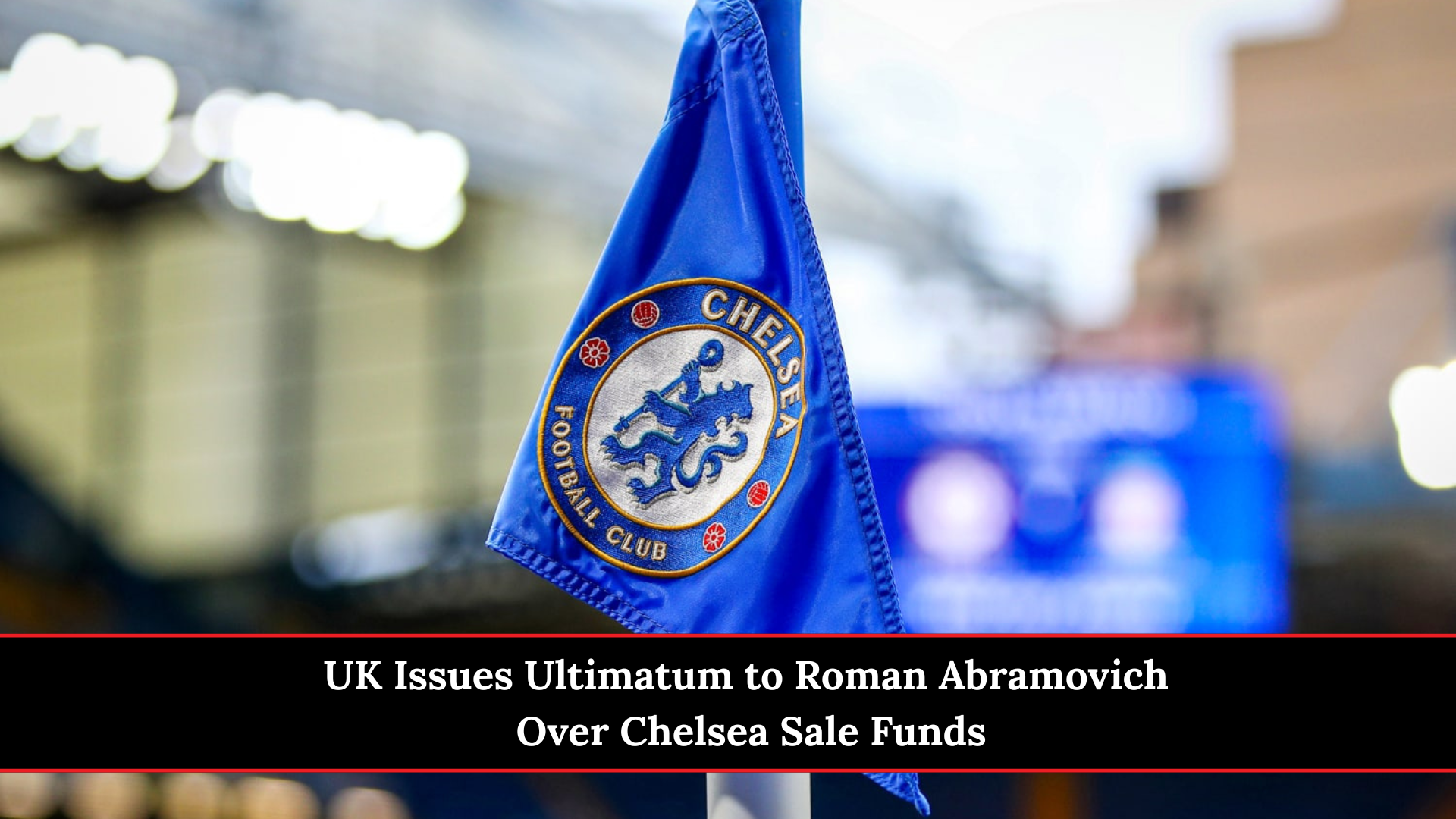

Ultimatum to Roman Abramovich Over Chelsea Sale Funds. The United Kingdom has issued a final warning to Russian oligarch Roman Abramovich over billions of pounds generated from the sale of Chelsea Football Club.
The British government says Abramovich must allow the money to be sent to humanitarian causes inside Ukraine, or face legal action.
The funds, worth £2.5 billion, have remained frozen since 2022. That was when Abramovich sold Chelsea shortly after Russia launched its full-scale invasion of Ukraine.
This issue has dragged on for years. Now, the UK government says it is time to act.
What Is the Chelsea Sale Funds Dispute?
In 2022, Abramovich sold Chelsea FC for £4.25 billion.
Due to international sanctions linked to Russia’s war on Ukraine, the UK government froze the proceeds of the sale.
Abramovich had publicly promised that the money would be used for charitable purposes. However, disagreements soon emerged over who should benefit from the funds.
- UK government position:
The money must go to humanitarian aid inside Ukraine only. - Abramovich’s position:
The funds should help all victims of the war, including those affected inside Russia.
Because of this disagreement, the money has stayed locked in a UK bank account for nearly three years.
UK Government’s “Final Chance” Warning
On December 18, 2025, the British government announced it was giving Abramovich a final opportunity to cooperate.
Chancellor of the Exchequer Rachel Reeves delivered a strong message.

She said it was unacceptable that billions meant for Ukrainians were still frozen and unused. According to her, the government is now ready to enforce the transfer through legal means if required.
Prime Minister Keir Starmer backed this stance and warned that the government is prepared to take the case to court.
“Every penny must reach those whose lives have been destroyed by Putin’s illegal war,” Starmer said.
Why the Funds Are Still Frozen
Freezing assets is legally straightforward under sanctions law.
Seizing or redistributing them is much harder.
This is the core legal challenge facing not just the UK, but Europe and the United States as well.
Governments can:
- Freeze sanctioned assets
- Block access to funds
But they struggle to:

- Permanently confiscate money
- Redirect ownership without lengthy legal processes
That is why Abramovich’s Chelsea funds remain untouched despite political pressure.
Europe Wider Struggle With Russian Assets
Across Europe, similar debates are ongoing.
The European Union has frozen hundreds of billions of euros in Russian state and oligarch assets. So far, EU countries have mostly sent interest earned on those assets to Ukraine, not the assets themselves.
EU leaders are expected to revisit proposals at upcoming summits to:
- Unlock frozen Russian assets
- Use them for Ukraine’s defense and budget needs
The Abramovich case is being closely watched as a potential test case.
UK Plans to Issue a Legal Licence
To break the deadlock, the UK government says it will issue a special licence.
This licence would:

- Allow the release of the £2.5 billion
- Enable the creation of a new charitable foundation
- Ensure funds are used strictly under UK legal conditions
Rachel Reeves told parliament that the government is open to any proposal from Abramovich that follows this legal route.
The key condition is clear.
- The money must benefit Ukraine
- It cannot benefit Abramovich
- It cannot benefit any sanctioned individuals
Role of Fordstam Ltd and Ongoing Talks
Foreign Secretary Yvette Cooper confirmed that talks have been ongoing since 2022.
The discussions involve:
- Abramovich
- His company Fordstam Ltd
- UK government officials
Cooper hinted that a compromise might be possible.
Under the proposed framework:
- Sale proceeds go only to Ukraine
- Future earnings from the foundation could help victims of conflict worldwide
However, Russia would not be a direct beneficiary of the original funds.

Why the UK Is Taking a Harder Line Now
Several factors explain the tougher stance.
- Humanitarian urgency
Ukraine continues to face severe civilian suffering. - Political pressure
Public and parliamentary frustration has grown over the frozen money. - Symbolic importance
The Chelsea sale is one of the largest sanctioned asset cases in UK history. - Legal clarity
The government believes a licensed charitable route is now viable.
Abramovich Chelsea Era: A Brief Look Back
Abramovich bought Chelsea in 2003 for just £140 million.
At that time:
- Manchester United dominated English football
- Arsenal were league champions
Abramovich transformed Chelsea almost overnight.
Key Achievements Under Abramovich
- 19 major trophies in 19 years
- 5 Premier League titles
- 5 FA Cups
- 2 UEFA Champions League wins
- Over $1 billion spent on players
His investment turned Chelsea into a global football powerhouse.
Despite his success at the club, his ties to Russia made him a target of sanctions after the Ukraine invasion.
Why This Case Matters Globally
The Abramovich ultimatum goes beyond football.

It raises major questions:
- Can sanctioned assets be redirected legally?
- How far can governments go without violating property rights?
- Will this case set a precedent for other frozen Russian funds?
Many legal experts believe the outcome could shape future sanctions policy across Europe.
What Happens If Abramovich Refuses?
If Abramovich does not comply, the UK government has signaled it will:
- Start court proceedings
- Seek legal authority to enforce the transfer
- Attempt to prove that previous commitments were legally binding
However, legal experts warn the process could be:
- Lengthy
- Politically sensitive
- Challenged in higher courts
Conclusion
The UK’s ultimatum to Roman Abramovich highlights growing pressure to turn frozen assets into real humanitarian support. With billions still locked, the government is signaling urgency, legal resolve, and moral responsibility. The final outcome could set an important precedent for handling sanctioned funds worldwide.