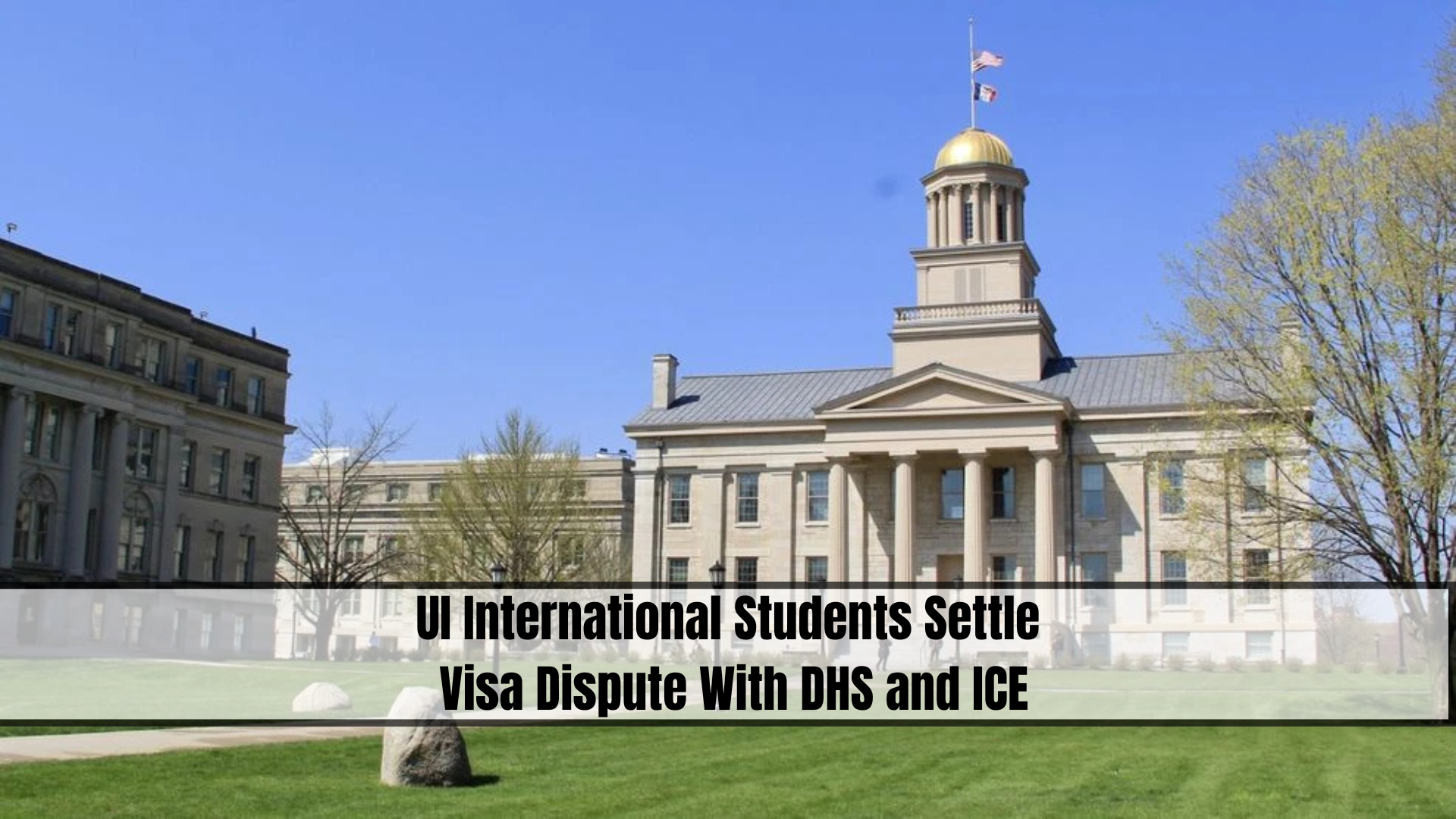

UI International Students Settle Visa. UI international students settle visa dispute after reaching a formal settlement with the U.S. Department of Homeland Security (DHS) and Immigration and Customs Enforcement (ICE) on December 5, 2025. The agreement closed a high-profile federal case and allowed the affected students to retain their visa status and continue their education in the United States.
This case drew national attention because it highlighted how international student visas were terminated without clear explanations and how federal law was applied during a broader immigration enforcement push.
University of Iowa Visa Case
Three international students and one recent graduate from the University of Iowa (UI) filed a lawsuit earlier in 2025 after DHS terminated their student visas. The students said they received sudden notices in April 2025 stating that their visas were canceled and that they would face deportation if they did not leave the U.S. voluntarily.
The terminations came without prior warning or detailed justification, leaving the students uncertain about their legal status, education, and future plans.
Temporary Court Protection for the Students
In May 2025, a federal judge stepped in and issued a temporary injunction. This order stopped DHS and ICE from deporting the students while the case was under review.
This decision was critical. It allowed the students to remain in the United States legally, continue their studies, and challenge the visa terminations in court.

Nationwide Crackdown on International Students
The University of Iowa case was part of a nationwide enforcement effort launched during the Trump administration. The initiative targeted what the government described as “student criminal aliens.”
According to court filings and public records:
- More than 6,000 international students nationwide were affected
- Thousands of students filed lawsuits
- Many argued their visas were canceled without proper legal grounds
The policy relied heavily on data from the National Crime Information Center (NCIC).
Why the Students Visas Were Terminated
ICE officials said the students’ visa statuses were terminated after NCIC records showed nonviolent criminal offenses, including:
- Driving without a valid license
- Disorderly conduct
- Operating while intoxicated (OWI)
The students had pleaded guilty to these charges. However, none of the offenses were violent crimes.

What the Law Actually Says About Student Visa Termination
Federal immigration law allows student visa termination only for violent crimes where:
- A sentence of more than one year in prison may be imposed
The students’ legal team argued that the offenses listed in their records did not meet this legal standard.
This legal mismatch became a key issue in the lawsuit.
Settlement Reached on December 5, 2025
On December 5, 2025, a federal court approved the settlement agreement between the students and DHS. With this order, the case was officially closed.
The settlement resolved all claims without admitting wrongdoing by the government, but it delivered clear protections for the students.

Key Terms of the Settlement Agreement
The settlement included several important provisions:
SEVIS Status Restored
DHS agreed to reactivate the students’ records in the Student and Exchange Visitor Information System (SEVIS). This restored their status to active, reversing the earlier termination.
Protection From Past Charges
ICE agreed not to terminate the students’ visas based on the criminal charges already listed in national databases.
Limits of the Agreement
ICE retained the authority to terminate visa status in the future if:
- A student fails to maintain valid nonimmigrant status
- A student engages in new unlawful activity
- Other lawful grounds arise after SEVIS reactivation
This clause clarified that the agreement does not provide blanket immunity.

Impact on the University of Iowa Community
The case had a strong impact on the University of Iowa’s international student community. The UI International Programs office, which supports study and exchange programs in nearly 50 countries, closely monitored the situation.
For many international students, the settlement provided reassurance that due process still applies in immigration decisions.
Why This Case Matters for International Students
This settlement sets an important example:
- Visa status cannot be terminated outside the limits of the law
- Nonviolent minor offenses alone do not justify automatic visa cancellation
- Students have the right to challenge administrative decisions
It also shows how federal courts can act as a check when immigration enforcement exceeds legal authority.
Broader Legal and Policy Implications
While the case is closed, it adds to the ongoing debate about:

- The use of criminal databases in immigration enforcement
- Transparency in visa termination decisions
- Due process rights for international students
Many legal experts believe similar cases will influence future DHS and ICE policies.
Conclusion
The UI international students visa settlement marks a significant moment for student immigration rights in the United States. By restoring visa status and clarifying enforcement limits, the agreement reinforces that immigration actions must align with existing law.
For international students across the country, the case serves as a reminder that legal protections exist and that challenges can succeed when policies overstep their boundaries.