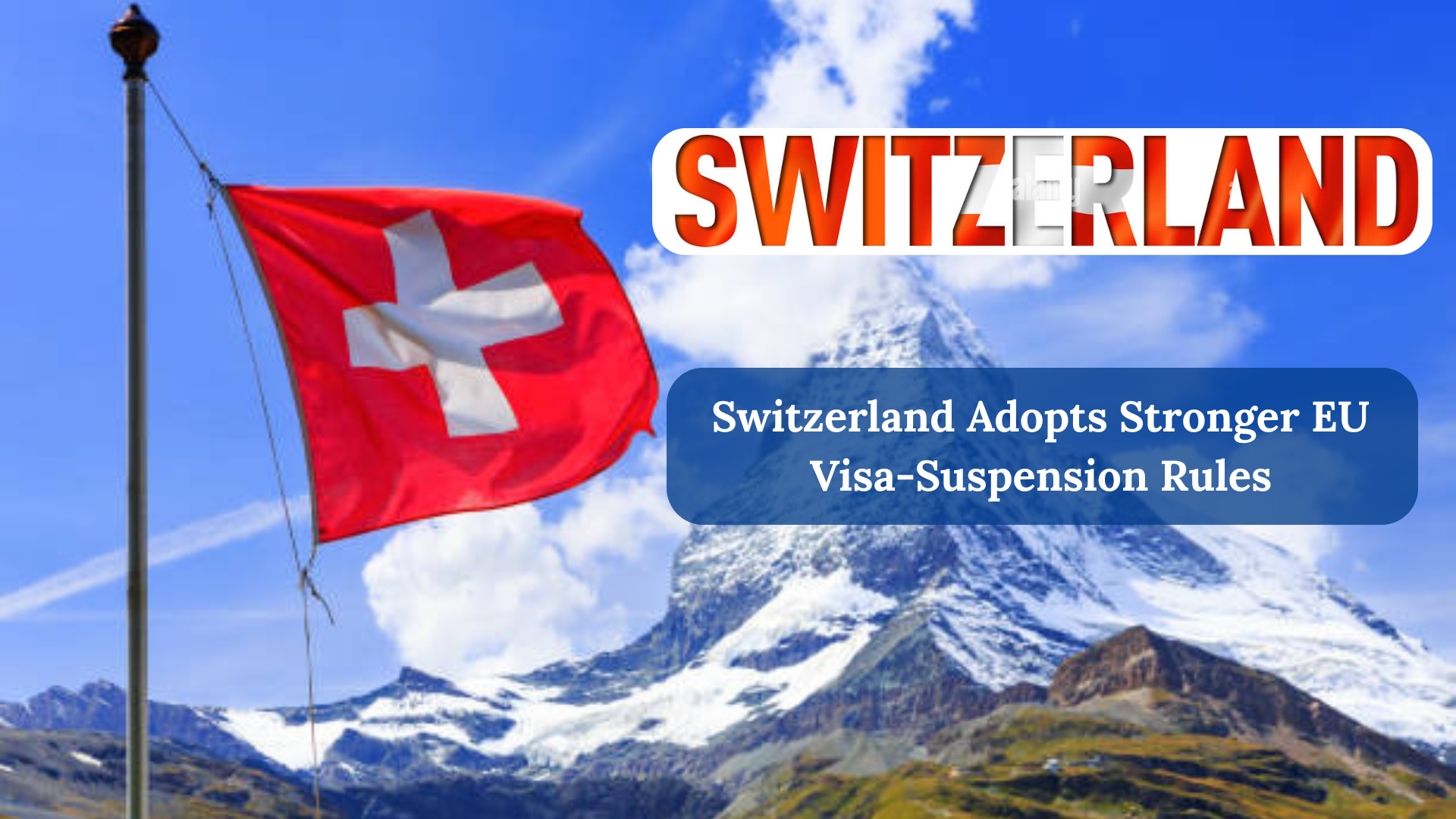

Switzerland Adopts Stronger EU Visa-Suspension Rules. Switzerland has officially embraced a stronger EU visa-suspension mechanism, marking a major shift in how visa-free travel can be restricted across the Schengen Area. As someone who tracks global mobility trends daily, I can say this update matters for tourists, businesses, and migrants who rely on smooth cross-border movement. The new rule lowers the bar for suspending visa exemptions and brings new triggers that reflect today’s migration and security realities.
Switzerland Aligns With Updated EU Rules
The Swiss Federal Council confirmed that it will adopt the revised EU regulation approved on 17 November 2025. These changes are meant to strengthen the Schengen framework and give EU and Schengen members more control when irregular migration patterns shift quickly.
The amended rules will take effect in Switzerland on December 17, 2025, after updates to the Swiss Ordinance on Entry and the Granting of Visas (OEV).
Lower Thresholds for Suspending Visa-Free Travel
Under the new mechanism, a visa exemption for a third country can now be suspended more easily. The EU lowered two key thresholds:
1. Rise in Irregular Migration
- New rule: A 30% increase in irregular residents or refused entries
- Old rule: 50% increase
This makes it easier for Schengen states to react quickly if a sudden spike in irregular movement occurs.
2. Sharp Increase in Asylum Applications
- If asylum applications from a specific country rise significantly
- AND the recognition rate is below 20% (earlier threshold was just 3%)
This protects the system when high volumes of unfounded asylum claims strain resources.
New Grounds Added for Reinstating Visa Requirements
The EU also expanded the scope of situations where visa obligations can return. New factors include:
• Security threats linked to “instrumentalization” of migrants
This refers to situations where migrants are used as political pressure tools.
• Change in conditions that originally justified visa-free status
If a country no longer meets the standards under which it was granted visa exemption, the EU can suspend access.

• Human-rights deterioration affecting EU relations
Serious violations may now influence visa policy decisions.
These additions reflect the EU’s growing focus on border control, geopolitical stability, and human-rights accountability.
Emergency Suspension for Up to 12 Months
One of the most impactful features of the revised mechanism is a fast-track emergency procedure.

In urgent cases:
- The European Commission can reintroduce visa requirements
- For up to 12 months
- Without needing approval from all member states
- The rule applies across the entire Schengen Area
This ensures the EU can respond immediately when facing serious or sudden migration-related risks.
What This Means for Travelers and Businesses
These changes do not automatically remove visa-free travel for any country. Instead, they make it easier and faster for the EU and Switzerland to suspend visa exemptions if migration patterns or security conditions worsen.
For travelers:
- Visa-free access remains unchanged for now
- But monitoring future policy updates is crucial
For businesses:
- Companies relying on visa-free movement of partners or staff should stay alert
- Sudden suspensions could affect travel planning, mobility projects, and international hiring
For migrants:
- Countries with rising irregular migration may face tighter scrutiny
- Asylum trends will play a bigger role in EU visa decisions
Why Switzerland’s Move Matters
Switzerland, though not an EU member, is a key Schengen partner. Its alignment with updated EU rules shows:
- Commitment to coordinated migration control
- Support for EU security and border-management strategies
- Intention to prevent misuse of visa-free travel routes
These steps strengthen Switzerland’s integration in the shared Schengen framework.
Official Effective Date
Switzerland will apply the updated visa-suspension mechanism starting:
December 17, 2025
After amendments to the Ordinance on Entry and the Granting of Visas (OEV).

Conclusion
Switzerland’s adoption of the stronger EU visa-suspension mechanism signals a more responsive and security-focused approach to visa-free travel. While no country loses its exemption immediately, travelers and businesses should monitor future updates as migration patterns and geopolitical conditions evolve.