
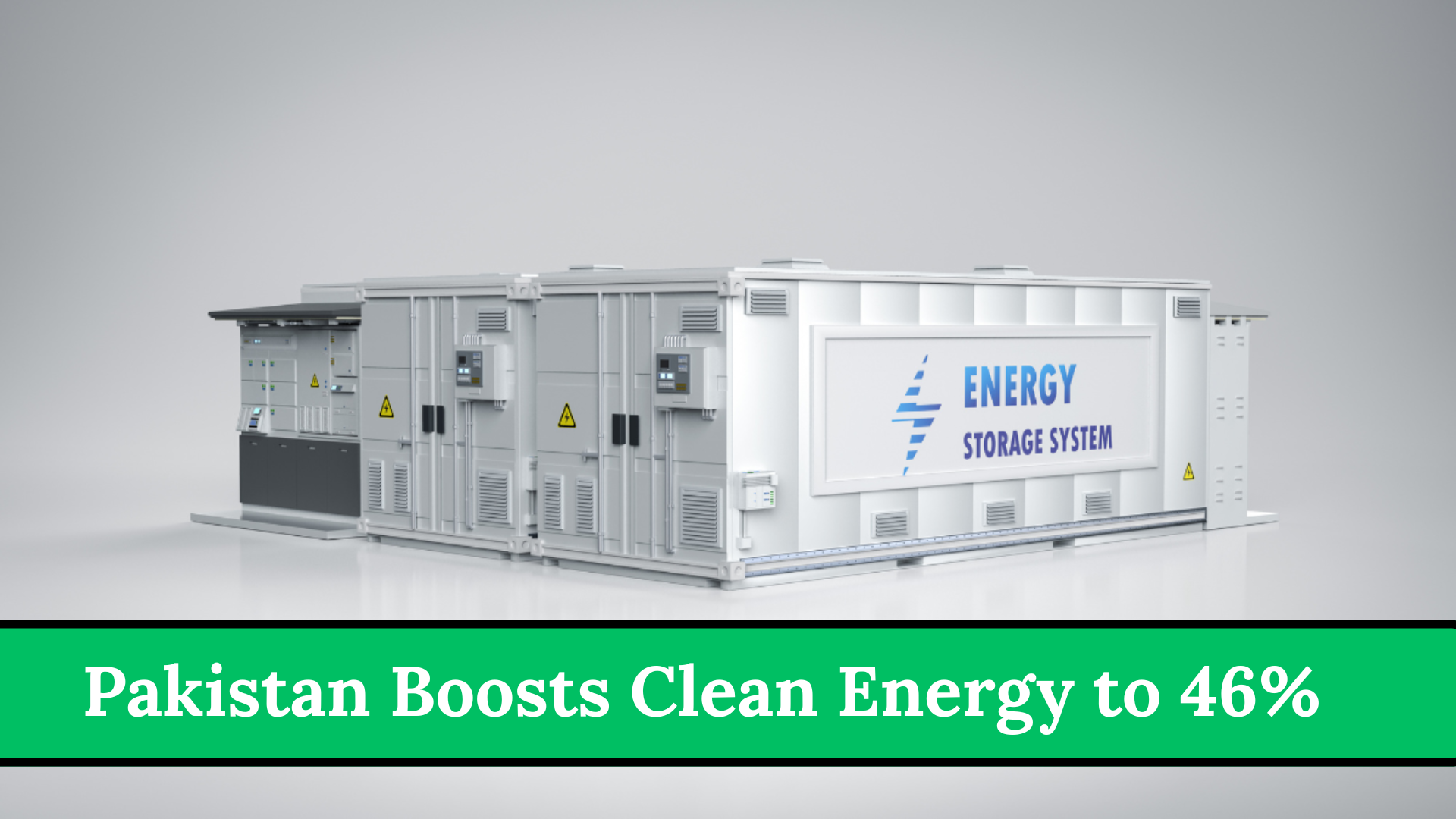

Pakistan Boosts Clean Energy to 46%. The Pakistani government has announced major steps toward stabilizing the national power grid by deploying large-scale Battery Energy Storage Systems (BESS) and accelerating the shift to clean, indigenous energy. The move aims to fix grid instability caused by fluctuating renewable energy supply and reduce the country’s dependence on expensive imported fuels.
Power Minister Sardar Awais Leghari, in a written statement to the National Assembly, outlined how these new investments and policy adjustments will improve grid reliability, support economic growth, and prepare Pakistan for a cleaner energy future.
New Era of Grid Stability: Why Battery Storage Matters
Pakistan’s rapid expansion of renewable energy—especially solar and wind—has created challenges for the national grid. These systems generate clean power, but their supply can fluctuate based on weather, causing frequency imbalance and power disruptions.
To address this issue, the government is now:

- Encouraging private-sector investment in utility-scale BESS
- Using battery storage to smooth out renewable supply variations
- Optimizing grid demand management
- Enhancing system reliability and reducing unexpected outages
Battery storage will allow the grid to store excess energy and release it when demand spikes or when renewable generation drops, making electricity supply more stable and predictable.
Pakistan Clean Energy Share Reaches 46% — Ahead of 2025 Goal
In a major milestone, Pakistan’s clean energy share reached 46% by September 2025, surpassing the government’s 40% target well before the deadline. This shift reflects growing reliance on local, renewable, and low-cost power sources.
Current Clean Energy Breakdown
According to the Minister:
- 60 private renewable projects operational (4,753MW total)
- 680MW solar
- 1,937MW run-of-river hydro
- 1,845MW wind
- 291MW bagasse cogeneration
- Public-sector hydropower: 9,619MW
- K-Electric solar: 100MW
- Net-metering solar systems: 6,390MW added as of September 2025
Together, these additions have pushed Pakistan’s clean energy footprint to one of the highest in the region.
Major Policy Shift: Reducing Pakistan’s LNG Dependence
Power Minister Awais Leghari confirmed that Pakistan is steadily cutting back on imported liquefied natural gas (LNG) due to:
- High LNG contract costs
- Increasing renewable adoption
- Stagnant domestic electricity demand
Instead, the government is promoting indigenous resources, such as:

- Thar coal
- Solar energy
- Wind power
- Bagasse
- Hydropower
The objective is to create a least-cost, secure generation mix that protects the country from fuel price shocks and international supply disruptions.
Boost for Renewable Investors: Competitive Trading Market Opens
The government has finalized an initial 800MW allocation for the new Competitive Trading Bilateral Contract Market (CTBCM). This will allow renewable energy companies to directly sell electricity to large consumers through bilateral contracts.
Key points:

- Producers can enter direct supply agreements
- Wheeling charge expected to be around Rs. 13 per unit
- Supports private investment and reduces dependency on centralized procurement
This framework is expected to attract global investors and accelerate renewable market expansion in Pakistan.
Solar Revolution: More Homeowners and Businesses Join Net-Metering
Leghari emphasized rapid adoption of solar energy across all sectors. Net-metering regulations have made it easier for consumers to:
- Install solar panels
- Offset their monthly electricity usage
- Sell excess electricity back to the grid
With over 6,390MW added through net-metering, rooftop solar is becoming one of Pakistan’s fastest-growing energy segments.

No Loadshedding Due to Power Shortage, Minister Confirms
The Minister clarified that current loadshedding is not caused by generation shortfalls. Instead:
- Load management is carried out based on average technical and commercial losses
- No loadshedding is being implemented due to lack of electricity supply
- Better grid planning and renewable integration are improving reliability
This marks a significant improvement compared to previous years when shortages were common.
What This Means for Pakistan’s Energy Future
These new initiatives signal a strong shift toward:
- Energy independence
- Lower electricity costs
- Clean and sustainable power generation
- Modern grid stability through battery storage
If fully implemented, Pakistan could become a regional leader in renewable energy deployment.
Conclusion
Pakistan’s push for large-scale battery storage, reduced LNG use, and expanded renewable energy marks a major transition toward a stable, affordable, and clean power future. With rising solar adoption and new market frameworks, the country is building a stronger and more sustainable national grid.