
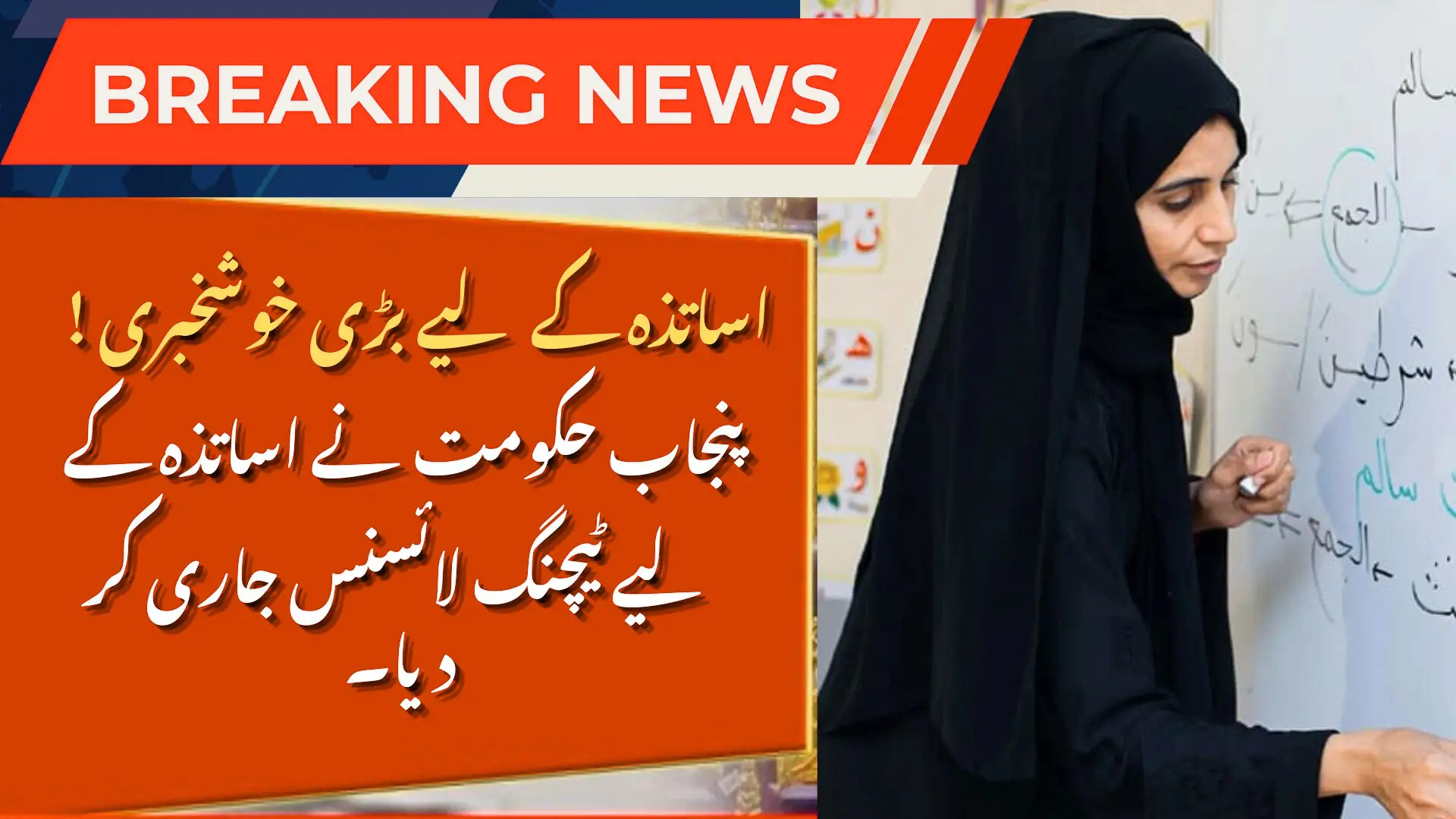

Mandatory Teaching Licenses. Punjab is preparing for a major education reform as the School Education Department has announced that a mandatory teacher licensing system will be introduced in 2026. This new policy will apply to both government and private school teachers across the province. The goal is to improve teaching quality, raise professional standards, and ensure that only trained, qualified teachers enter the classroom.
Teaching License to Become Compulsory for All Teachers
According to senior officials, the department will soon send a formal summary to the Provincial Cabinet for approval. Once approved, every teacher—whether serving in public schools or private institutions—will be required to obtain a professional teaching license.
This license will become a key requirement for:

- New teaching appointments
- Contract renewals
- Career growth within the education department
Contract Teachers Must Obtain the License for Extension
A major part of the reform states that contract teachers will only receive an extension if they successfully acquire the teaching license.
This step is being introduced to ensure that:

- Teachers remain updated on modern teaching methods
- Only competent and qualified individuals remain in service
- Schools maintain consistent teaching standards
Licensing Test to Be Conducted by PEC/PECTA
Under the proposed system, teachers will have to pass a licensing test to qualify for the official teaching license.
The testing and evaluation process will be supervised by:

- Punjab Examination Commission (PEC)
- Punjab Examination Commission for Teacher Assessment (PECTA)
Both bodies will design the test, evaluate teachers fairly, and ensure that the process remains transparent.
Only candidates who clear the exam will be issued the official teaching license.

Purpose of the Teaching License System
The School Education Department has highlighted several benefits of this system:
1. Improving Teaching Quality
The license will ensure that teachers meet a minimum skill and knowledge standard before entering the classroom.

2. Strengthening Professionalism
Teachers will be recognized as qualified professionals, similar to doctors, engineers, and lawyers who must also hold licenses.
3. Better Learning Outcomes
When teachers are well-trained and certified, students benefit from improved classroom performance and stronger academic results.
4. Accountability in Schools
Both private and public schools will be required to hire only certified professionals, reducing unqualified teaching practices.
Conclusion
Punjab’s decision to launch mandatory teaching licenses in 2026 marks a major milestone in improving the province’s education system. With compulsory testing, transparent evaluations, and a focus on professional development, the new licensing system is expected to raise teaching standards and deliver better learning outcomes for students across Punjab.