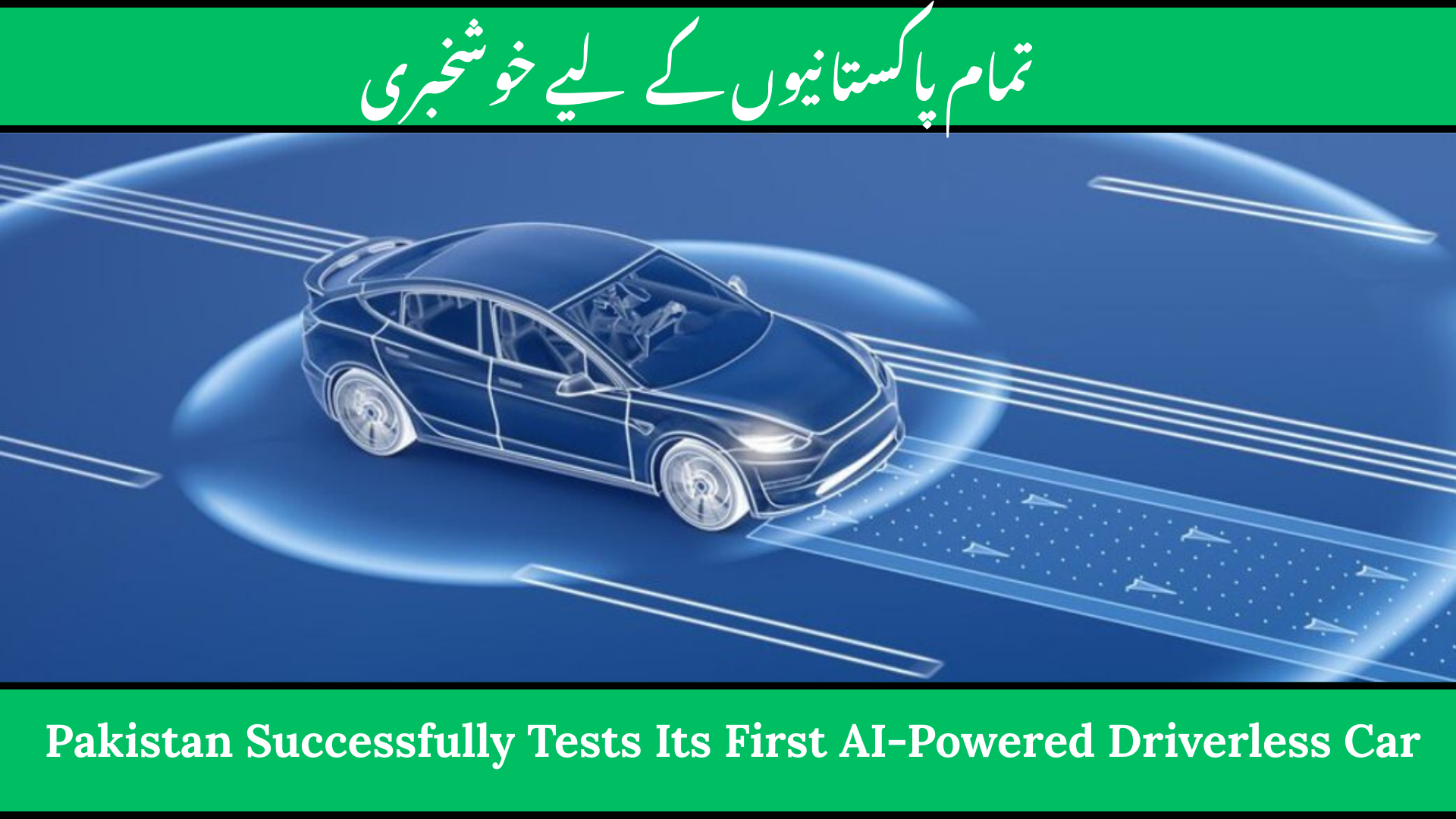

AI-Powered Driverless Car. Pakistan has taken a major step toward the future of transportation. Engineers at NED University of Engineering and Technology have successfully tested the country’s first AI-powered driverless car, marking a historic moment for local innovation, artificial intelligence, and engineering.
The test was conducted inside the university campus, where the self-driving vehicle operated smoothly without human control. Students, researchers, and visitors closely observed the trial, which highlighted Pakistan’s growing capabilities in advanced technology.
First Driverless Car Developed in Pakistan
The project was developed by the National Centre for Artificial Intelligence (NCAI) at NED University. Over the past year, a team of Pakistani engineers transformed a China-imported electric vehicle into a fully autonomous car.
To achieve this, the team integrated:
- Artificial intelligence systems
- Robotics control units
- Digital mapping tools
- Advanced sensors and cameras
- Computer vision and radar technology
This combination allows the car to understand its surroundings and make driving decisions on its own.
One Year of Continuous Research and Development
According to Dr Muhammad Khurram, Director of the National Centre for Artificial Intelligence and project head, the vehicle has now reached a mature testing stage after one year of continuous development.

He explained that the team has successfully built:
- AI-based steering control
- Radar-guided movement
- Computer vision-based navigation
The next phase focuses on making the system even smarter and safer for real-world conditions.
Smart Features of the AI Driverless Car
The driverless car already supports several intelligent driving features, including:
Autonomous Steering and Turning
The vehicle can turn independently while judging oncoming traffic, without human input.
Speed Control
Currently, the car operates at a safe speed of 15 to 20 km/h, suitable for controlled testing environments.

Advanced Object Detection
Engineers are working on improving the car’s ability to detect vehicles, pedestrians, and obstacles.
Lane and Traffic Signal Recognition
The system is being trained to identify:
- Road lanes
- Speed-limit signs
- Traffic lights
These features are essential for future deployment on public roads.
Designed for Pakistan’s Road Conditions
One of the biggest challenges for autonomous vehicles in Pakistan is road quality. According to team member Inzamam Khan, the AI system has been designed to handle:
- Potholes
- Uneven road surfaces
- Poor lane markings
High-resolution sensors and vision systems allow the car to adapt to difficult driving environments, making it more suitable for local conditions.

Strong Institutional Support Behind the Project
The driverless car project began during the tenure of former Vice Chancellor Dr Saroosh Hashmat Lodhi. Under the leadership of current Vice Chancellor Dr Tufail Ahmed, the initiative has made rapid progress.
This continuity of academic and institutional support played a key role in turning the idea into a successful real-world test.
Why This Test Is Important for Pakistan
The successful trial is more than just a university experiment. It represents:
- Growth in Pakistan’s AI and robotics sector
- Strong engineering talent at local universities
- Reduced dependence on foreign autonomous technology
- A foundation for smart transport and future mobility
This achievement places Pakistan on the global map of countries actively developing autonomous vehicle technologies.
Future Scope of Driverless Technology in Pakistan
While the current test was limited to campus roads, experts believe this project can lead to:

- Smart public transport systems
- Autonomous delivery vehicles
- Safer traffic management
- Research collaboration with industry and government
With further testing, regulation, and investment, driverless technology could play a key role in Pakistan’s digital transformation.
FAQs first AI-powered driverless car
What is Pakistan’s first AI-powered driverless car?
It is an autonomous electric vehicle developed by NED University engineers using artificial intelligence, sensors, and robotics.
Who developed the driverless car?
The project was developed by the National Centre for Artificial Intelligence (NCAI) at NED University.
How fast can the car drive?
Currently, it operates at 15–20 km/h during testing.
Can it handle Pakistan’s roads?
Yes. The system is designed to manage potholes and uneven surfaces using high-resolution sensors.

Is the car ready for public roads?
Not yet. It is still in the testing and development phase.
Conclusion
The successful testing of Pakistan first AI-powered driverless car is a proud moment for the country’s engineering community. It shows that with the right talent, research environment, and vision, Pakistan can develop advanced technologies locally.
This achievement is not just about a car. It is about innovation, confidence, and the future of smart mobility in Pakistan.